

Why B2B Businesses Are Outgrowing Their Software and What They Really Need
B2B businesses are under pressure to deliver more than ever before.
Clients expect lightning speed, accuracy and a silky smooth experience, no matter how complex the product or sales cycle.
But too often, the software systems in place are holding companies back.
From disconnected platforms to inflexible tools, many B2B companies are wrestling with software that was built for a different era.
If your business is feeling the strain, you are not alone.
Here are 8 of the top challenges B2B businesses face with existing software, and the problems they are desperate to solve:
1. Fragmented systems = fragmented experiences
Many B2B companies rely on a patchwork of systems.
One for CRM, another for orders, something else for support or inventory. Each does its job in isolation but together? Chaotic.
They create data silos, duplicated work and an inconsistent experience for the customer.
When systems don’t talk to each other, staff waste time reconciling information manually.
Even worse, your customer might get a very different story from sales than they do from support.
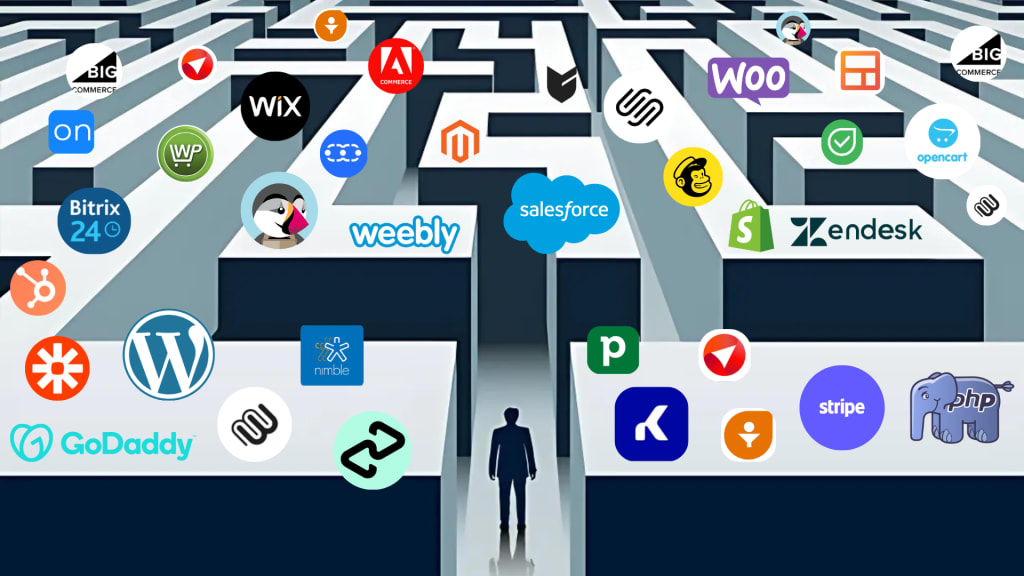
2. Real-Time Data? What a DREAM!
When customer or order data lives in different systems, there is no single source of truth.
Sales teams work off spreadsheets. Support teams pull reports from elsewhere. Marketing is guessing what is working.
The result? Slower decisions, delayed responses and missed opportunities to engage with the customer at the right time.
3. Off-the-shelf doesn’t fit
B2B is complex.
Tiered pricing, contract approvals, custom shipping rules, bulk orders.
Most pre-built platforms weren’t designed to handle that complexity.
They are rigid, and trying to force them to adapt often means expensive custom development or time-consuming workarounds.
Businesses need software that fits their processes, not the other way around.
4. Integrations that constantly break
Connecting one system to another, let alone five or six, can be a horror film.
Integrations fail, APIs change and every new tool added increases the risk of downtime or data inconsistency.
When your software stack becomes too fragile to touch, innovation stalls.
5. The customer experience feels…clunky 🥴
In a world where B2C platforms offer sleek, personalized buying journeys, many B2B buyers are left wondering why they still have to email PDFs to place an order or wait days for a quote.
It’s 2025. The bar has been raised.
B2B clients want personalised recommendations, live order updates and easy reordering. They want self-service with human backup, without logging into three different portals.

6. Growth is getting harder
What works at $2M in revenue may not work at $20M.
If a business expands into new markets, launches more products or adds more teams, legacy software often can’t keep up.
Multi-site management, different currencies or languages and expanding partner channels all add complexity that outdated systems can’t handle easily. P.S We can’t relate 😉
7. You can’t improve what you can’t see
Scattered data leads to limited visibility and businesses struggle to answer important questions like:
-
Which campaigns actually convert?
-
Which customers are at risk of churning?
-
Where are orders getting stuck?
Without clear reporting and insight, it’s difficult to invest in what is working, or fix what isn’t.
8. Risk and compliance are hard to control
With multiple vendors storing customer or transaction data in different systems, managing compliance and security becomes a full-time job.
It also increases the risk of breaches or audit failures, especially for industries with strict regulations, which is why StoreConnect takes this very seriously for all our clients.
So, what do B2B leaders really need?
-
One platform that brings everything together!
A unified system where all product, customer and order data lives in one place. -
Real-time insights, not just reports
Visibility that enables quick, data-informed decisions. -
Customer experiences that feel modern and seamless
Self-service portals, personalised journeys and better communication across the lifecycle. -
A solution that grows with the business
Agile, scalable tools that adapt to change, not ones that get in the way of it.

Remember, if your B2B business is grappling with some (or all) of these issues, you are not alone. The software stack that got you this far may not be the one that takes you forward.
The good news? Solving these problems is entirely possible…with the right approach.
Just ask Stoddart, an iconic Australian manufacturer who revolutionized their operations with our unified commerce.
As their team discovered: “With StoreConnect we can service the different requirements of our customers, including having a direct to consumer eCommerce store for direct purchase of spare parts, while also maintaining a more traditional B2B online store for more detailed customer requests. All managed out of our Salesforce org.”
👉 See how StoreConnect compares to traditional eCommerce stacks with our Comparison Chart. Or, if you’d prefer to ask a few questions directly, reach out here, we’d be glad to chat.